Bunny Story Font: A Sweet Touch for Makers
There I was, tracing the edges of a candle label with my finger, thinking about how to make it feel just right. The label needed to be friendly, inviting, and a little whimsical—something that would catch the eye of anyone walking by my booth. That’s when I reached for Bunny Story, a handwritten font that feels like it was made just for moments like this.
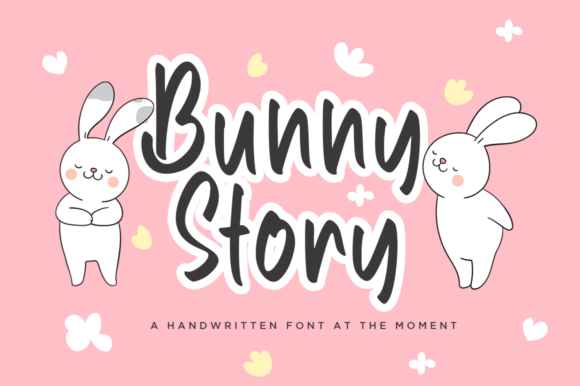
Bunny Story has a soft, natural flow that makes it feel handcrafted, even when it's on a digital design. It’s not too fussy, not too casual—it strikes a perfect balance between playful and professional. Its gentle curves and subtle variations give it a personality that feels authentic, like it was written by someone who cares about every detail.
I’ve used it on everything from greeting cards to wedding invitations, and each time it brings a sense of warmth and approachability. It works especially well on small text, like product labels or boutique tags, where readability is key but style matters just as much.
Using Bunny Story in Real Projects
One of my favorite uses for Bunny Story has been on seasonal labels. For a fall-themed candle line, I designed labels with phrases like “Cozy Nights” and “Cinnamon Dreams.” The font added a handmade feel without being too ornate. It paired beautifully with a clean sans serif for the scent names, creating a visual contrast that felt both modern and personal.
I also used it on printable wall art for a customer who wanted a custom quote for her living room. The font gave the piece a soft, inviting look that matched the overall aesthetic of her space. It was easy to read, even when printed at a larger size, which is important for wall art that needs to be seen from a distance.
For a set of birthday invitations, I experimented with different sizes and placements. The font worked well as a title, but I found that it really shined when used for the guest list or special notes. Its natural variation made each name feel unique, adding a personal touch that a more rigid font might miss.
Designing with Bunny Story
When working with cutting machines like Cricut or Silhouette, I always check how a font will look when cut out. Bunny Story holds up well on small stickers and labels, though I tend to avoid using it for long paragraphs. It’s best suited for short phrases, titles, or decorative elements that can stand on their own.
On packaging, Bunny Story adds a nice touch without overwhelming the design. I’ve used it on gift boxes, tote bags, and even mugs, where it complements the overall look of the product. It pairs well with other fonts, especially when I want to keep things simple. A basic serif or sans serif can balance the softness of Bunny Story, making the design feel more structured while still maintaining its charm.
For digital downloads, like printable planners or calendar pages, Bunny Story adds a nice visual element. It works great for headers, section titles, or decorative accents. I often use it alongside a bold display font for headings, then switch to a simpler font for body text, creating a layered and cohesive design.
Practical Tips for Using Bunny Story
If you’re planning to use Bunny Story for commercial purposes, make sure to check the licensing details. Some fonts have restrictions on how they can be used, especially if you're selling physical products or digital templates. Bunny Story is available in multiple file formats, so it should work seamlessly with most design software and cutting machines.
It’s also worth exploring the different styles and alternates included in the font. Some scripts have extra swashes or ligatures that can add a bit of flair without being too distracting. These details can make a big difference in how your final design looks, especially when used on signs, invitations, or signage.
For multilingual projects, check if the font supports the languages you need. While Bunny Story is primarily designed for English, it may include some characters for other languages depending on the version you purchase. If you’re working on something international, it’s always good to verify this before starting your design.
When designing for print, test the font at different sizes to ensure it remains legible. On small labels or stickers, Bunny Story can sometimes appear too light or too busy, so adjusting the weight or pairing it with a bolder font can help. For digital use, like social media graphics or website headers, it looks great as a display font that adds character without sacrificing clarity.
Bringing Your Vision to Life
Whether you're creating candle labels, greeting cards, or printable wall art, Bunny Story offers a versatile and charming option that fits a wide range of projects. Its handwritten style gives your designs a personal touch, making them feel more authentic and approachable. It’s the kind of font that can elevate your shop’s aesthetic without requiring a complete redesign.
As a maker, I love how Bunny Story allows me to express creativity while keeping things simple. It’s not just a font—it’s a tool that helps bring my ideas to life, one label, one card, one design at a time. If you're looking for a font that feels warm, friendly, and full of character, Bunny Story is definitely worth considering for your next project.